15-Liter Tanks: Debunking a Myth
Arriving on the boat, all we want is to enjoy a solid hour of diving without the anxiety of the pressure gauge. Looking at the rack, with a knowing smile, one says to the guide: “I’ll take the 15 today, I want to be on the safe side.” It is precisely at that moment that one falls for one of the most common misunderstandings in scuba diving, because what is in your hands is not a 15-liter tank at all.
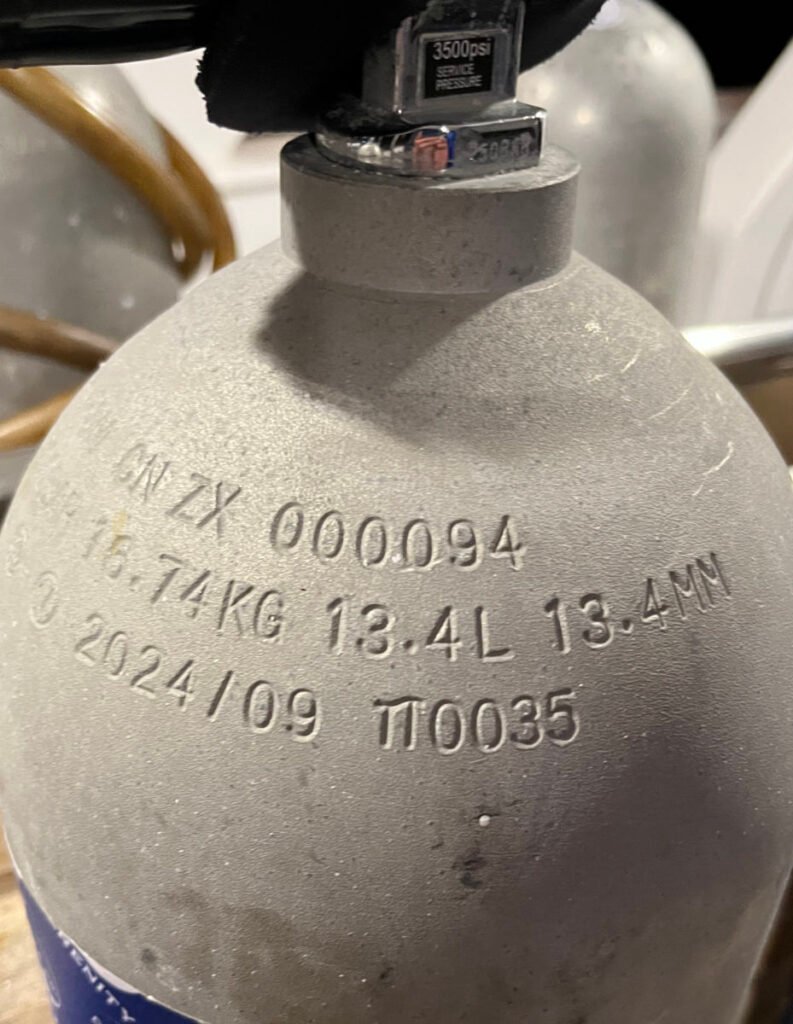
While in colder waters the steel 15-liter is a certainty, once you land in tropical seas, the rules change. Here, aluminum reigns supreme, and what is marketed as a 15 is almost always a C100 (100 cubic feet or cuft, the American unit of measurement for gas volume), produced by brands like Catalina or Luxfer. The problem is that, unlike steel, aluminum must have thick walls to withstand the pressure, and this subtracts space from the inside of the tank. The result? What we call a 15-liter has an actual water volume of approximately 13.2 liters. Nearly two liters of air are missing before even jumping into the water: a gap that can change the duration of the dive.
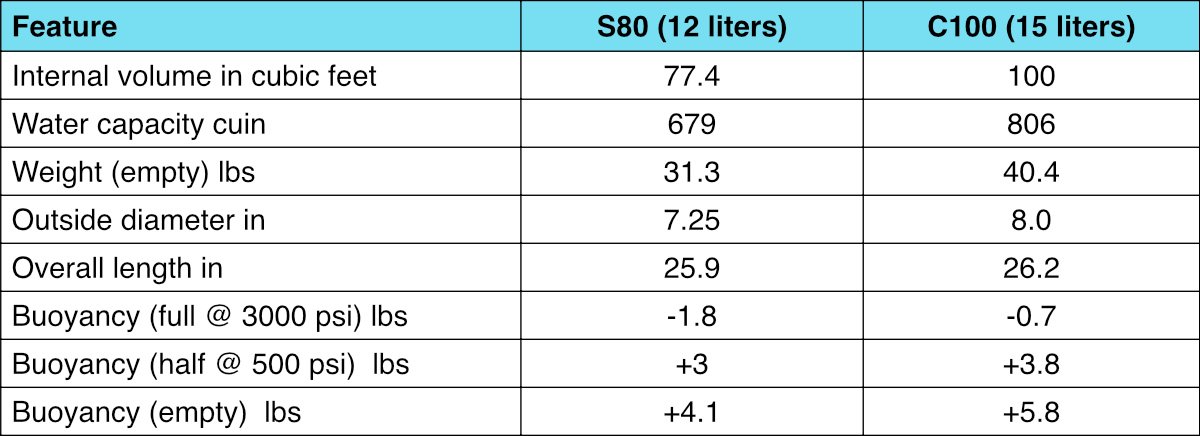
The same applies to the aluminum 12-liter, usually the S80 from the same companies. In this case too, the capacity is not 12 liters: the actual volume is lower and stops at 11.1 liters (for an actual gas capacity of 77.4 cuft), with a less marked difference compared to its larger sibling, but present nonetheless.
In the end, we have always gone into the water with these tanks convinced we had a different supply, and the dives have been wonderful anyway. However, now that the myth is debunked, the next time we are given an aluminum “15,” we will know exactly what we have on our backs. In the attached table, you can compare the differences in capacity and dimensions in detail, but above all, how these tanks affect buoyancy during different phases of the dive: from fully charged, at 500 PSI, to a completely empty tank.
Link to Catalina Cylinders comparative chart: here.